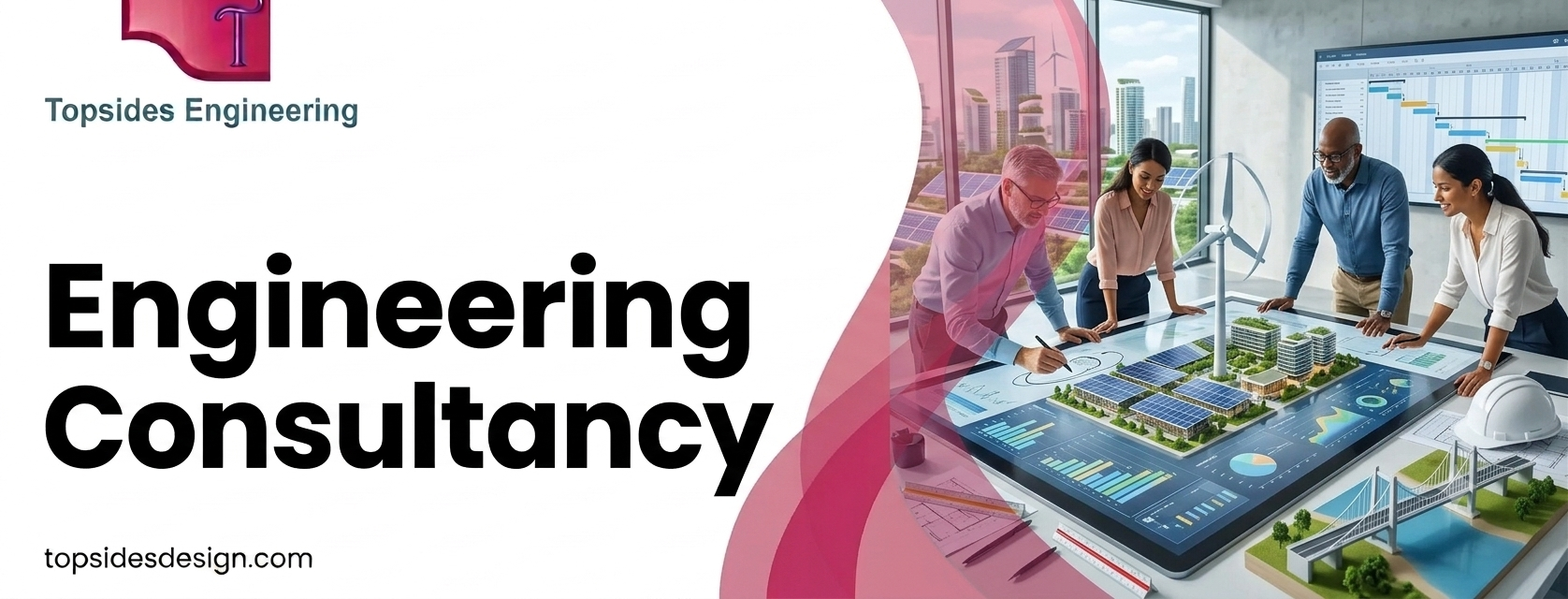
How Engineering Consultancy Supports Sustainable Infrastructure Development
Sustainable infrastructure has become a priority for governments, developers, and businesses worldwide. As populations grow and environmental regulations become stricter, organizations need infrastructure that is efficient, durable, and environmentally responsible. From commercial buildings and industrial facilities to bridges, offshore structures, and transportation networks, every project must balance performance with sustainability.
Engineering consultancy plays a vital role in achieving these goals. Professional engineering consultants help clients make informed decisions throughout every project stage, from planning and design to construction and long-term maintenance. Their expertise reduces waste, improves resource efficiency, minimizes risks, and ensures compliance with evolving environmental standards.
By integrating innovative technologies, advanced engineering methods, and sustainable design principles, engineering consultants create infrastructure that delivers long-term value while reducing environmental impact. This article explores how engineering consultants contribute to sustainable infrastructure development and why businesses increasingly rely on experienced consultants for successful projects.
Understanding Sustainable Infrastructure
Sustainable infrastructure refers to projects designed to meet needs without compromising future generations. These projects focus on environmental protection, economic viability, and social responsibility.
Modern infrastructure should:
- Minimize energy consumption
- Reduce carbon emissions
- Use resources efficiently
- Improve operational performance
- Increase structural longevity
- Lower maintenance costs
- Enhance public safety
- Adapt to future technological changes
Achieving these objectives requires more than quality construction. It begins with intelligent engineering decisions made long before construction starts.
The Strategic Role of Engineering Consultants
An engineering consultant provides specialized knowledge that influences every phase of an infrastructure project.
Their responsibilities often include:
- Feasibility studies
- Structural analysis
- Risk assessment
- Project planning
- Design optimization
- Material selection
- Regulatory compliance
- Cost estimation
- Construction support
- Quality assurance
Their independent expertise allows project owners to make informed decisions that improve sustainability without sacrificing performance or profitability.
Optimizing Design for Long-Term Performance
One of the greatest contributions engineering consultants make is optimizing project designs.
Rather than simply creating structures that meet minimum requirements, consultants evaluate multiple design alternatives to identify the most efficient solution.
Optimized designs can:
- Reduce unnecessary material usage
- Improve structural performance
- Lower construction costs
- Extend service life
- Simplify future maintenance
For example, advanced structural analysis identifies areas where materials can be reduced without affecting safety. This lowers both project costs and environmental impact.
Efficient designs also improve resilience against changing environmental conditions, including stronger storms, flooding, earthquakes, and temperature fluctuations.
Improving Resource Efficiency
Natural resources continue to become more valuable and expensive.
Engineering consultants help organizations maximize every resource used during construction.
This includes:
Material Optimization
Careful structural calculations eliminate excessive steel, concrete, and other materials while maintaining safety standards.
Water Management
Modern engineering designs incorporate efficient drainage systems, water recycling, and stormwater management solutions.
Energy Efficiency
Consultants recommend systems that reduce operational energy consumption throughout the infrastructure’s lifespan.
Construction Efficiency
Better planning minimizes material waste, transportation requirements, and construction delays.
Resource optimization reduces environmental impact while improving overall project economics.
Supporting Sustainable Material Selection
Material selection significantly influences a project’s environmental footprint.
Engineering consultants evaluate materials based on:
- Durability
- Recyclability
- Carbon footprint
- Availability
- Maintenance requirements
- Lifecycle costs
Instead of focusing only on initial construction expenses, consultants consider the total lifecycle of every material.
Sustainable material choices often include:
- High-strength structural steel
- Recycled construction materials
- Low-carbon concrete
- Corrosion-resistant alloys
- Energy-efficient building components
Selecting appropriate materials increases durability while reducing future replacement needs.
Reducing Construction Risks
Unexpected project issues often increase waste, delays, and costs.
Engineering consultants minimize these risks through comprehensive planning.
Consultants perform:
- Site investigations
- Structural simulations
- Load calculations
- Safety assessments
- Environmental impact evaluations
Identifying potential challenges early prevents expensive modifications during construction.
Risk management also protects workers, nearby communities, and surrounding ecosystems.
Integrating Digital Engineering Technologies
Technology has transformed engineering consultancy. Modern consultants use advanced digital tools that improve project accuracy and sustainability.
Among these technologies, Tekla modeling enables engineers to create highly detailed 3D structural models, improve fabrication accuracy, detect design conflicts early, and streamline construction workflows.
These technologies include:
Building Information Modeling (BIM)
BIM creates intelligent digital models that improve collaboration between architects, engineers, contractors, and owners.
3D Structural Modeling
Three-dimensional models reduce design conflicts before construction begins.
Structural Analysis Software
Advanced simulations predict structural behavior under different loading conditions.
Digital Collaboration Platforms
Real-time communication improves coordination among project teams.
Digital engineering significantly reduces construction errors, material waste, and project delays.
Supporting Renewable Energy Infrastructure
The transition toward renewable energy has increased demand for specialized engineering expertise.
Engineering consultants contribute to projects involving:
- Offshore wind farms
- Solar power facilities
- Hydroelectric infrastructure
- Energy storage systems
- Transmission structures
These projects require detailed structural analysis, environmental assessments, and long-term performance evaluations.
Offshore engineering solutions ensure renewable energy infrastructure remains safe, reliable, and economically sustainable.
Enhancing Infrastructure Resilience
Climate change presents new engineering challenges.
Infrastructure must withstand increasingly severe weather conditions while maintaining operational reliability.
Engineering consultants incorporate resilience through:
- Wind load analysis
- Seismic design
- Flood-resistant foundations
- Corrosion protection
- Structural redundancy
- Climate-adaptive materials
Resilient infrastructure requires fewer repairs and experiences longer service life, supporting both sustainability and financial performance.
Ensuring Regulatory Compliance
Environmental regulations continue evolving worldwide.
Engineering consultants stay informed about changing standards and ensure projects comply with applicable codes and regulations.
Compliance includes:
- Environmental protection requirements
- Building codes
- Structural standards
- Occupational safety regulations
- Sustainability certifications
Meeting these requirements early prevents project delays, penalties, and redesign costs.
Lowering Lifecycle Costs
Sustainability extends beyond construction.
Engineering consultants evaluate the total lifecycle cost of infrastructure, including:
- Initial construction
- Maintenance
- Repairs
- Energy consumption
- Equipment replacement
- Operational efficiency
- End-of-life recycling
Although sustainable solutions like steel detailing services may involve higher upfront investment, they often generate substantial savings over decades.
Lower lifecycle costs benefit both owners and the environment.
Supporting Smart Infrastructure
Modern cities increasingly rely on smart infrastructure.
Engineering consultants integrate technologies that improve monitoring, maintenance, and operational efficiency.
Examples include:
- Structural health monitoring systems
- IoT-enabled sensors
- Predictive maintenance software
- Smart utility management
- Automated inspection technologies
These innovations extend infrastructure lifespan while reducing maintenance costs and resource consumption.
Collaboration Across Multiple Disciplines
Sustainable infrastructure requires collaboration among numerous specialists.
Engineering consultants coordinate with:
- Architects
- Structural engineers
- Mechanical engineers
- Electrical engineers
- Environmental experts
- Contractors
- Project managers
Integrated collaboration ensures every project component contributes toward sustainability objectives while maintaining quality and efficiency.
Future Trends in Engineering Consultants
The engineering consultancy industry continues evolving rapidly.
Emerging trends include:
- Artificial intelligence in engineering design
- Generative design optimization
- Digital twins
- Carbon-neutral infrastructure
- Modular construction
- Circular economy principles
- Advanced structural monitoring
- Automation in project management
Organizations that embrace these innovations will deliver more sustainable, resilient, and cost-effective infrastructure projects.
Conclusion
Sustainable infrastructure is no longer optional; it is essential for long-term economic growth, environmental responsibility, and resilient communities. Engineering consultancy serves as the foundation of this transformation by optimizing designs, improving resource efficiency, integrating advanced technologies, managing risks, and ensuring regulatory compliance throughout every project lifecycle. These contributions help organizations build infrastructure that performs better, lasts longer, and minimizes environmental impact.
For businesses seeking expert engineering solutions, they can trust us at Topsides Engineering. From structural engineering and steel detailing to advanced 3D modeling and project support, our experienced team helps clients deliver efficient, reliable, and sustainable engineering solutions. Learn more about our expertise by visiting our official website.