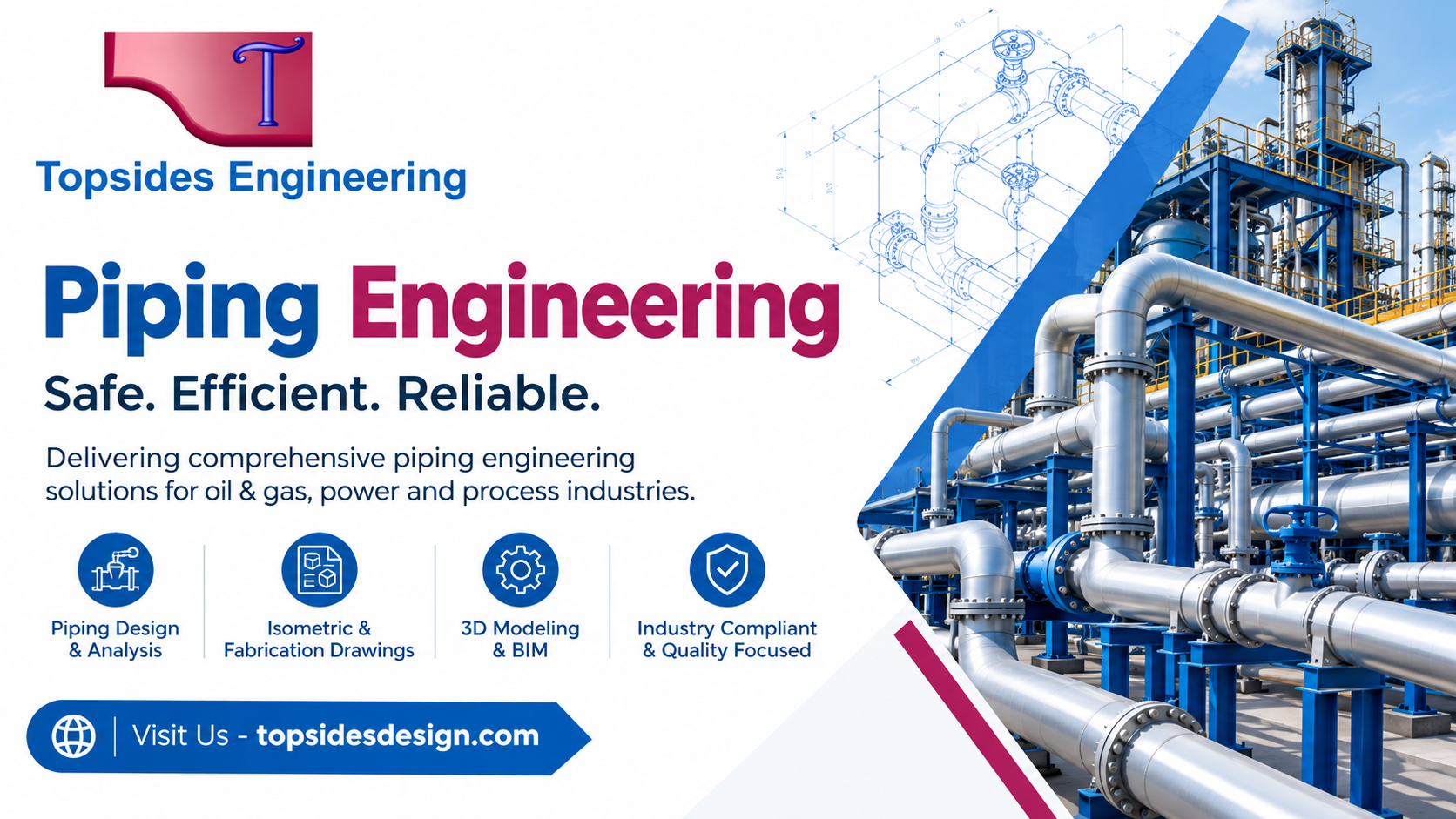
Piping Engineering vs Civil Engineering: Which Plays a Bigger Role in Industrial Plant Design
Industrial plant design involves multiple engineering disciplines working together to create facilities that are safe, efficient, and reliable. Among these disciplines, piping engineering and civil engineering play particularly important roles. While civil engineering provides the structural foundation for industrial facilities, piping engineering ensures that fluids, gases, and process materials move safely between equipment and systems. Both are essential, but their relative importance depends on the plant’s purpose, complexity, and operational requirements.
Understanding piping engineering vs civil engineering helps project owners, engineering teams, and EPC contractors make informed decisions about design priorities, resource allocation, and coordination. A chemical processing facility, an offshore platform, and a power generation plant may rely on these disciplines in different proportions, yet each requires close collaboration between them.
This blog covers the key differences, responsibilities, benefits, and collaboration between piping and civil engineering in industrial plant design.
What Is Piping Engineering in Industrial Plant Design
Piping engineering focuses on designing the systems that transport liquids, gases, steam, and other process materials throughout an industrial facility. It ensures that pipelines connect equipment correctly, maintain required flow rates, and operate safely under specified pressure and temperature conditions.
In industries such as oil and gas, petrochemicals, and power generation, piping systems influence production efficiency, equipment reliability, and operational safety. Engineers consider pipeline routing, material selection, pressure drop, thermal expansion, and maintenance access to develop systems that meet process requirements.
Piping engineers manage several technical activities during industrial plant development, including:
- Pipe sizing and hydraulic calculations to meet flow and pressure requirements.
- Piping layout design to optimize space and accessibility.
- Stress analysis to evaluate thermal expansion, vibration, and operating loads.
- Pipe support design to protect pipelines and connected equipment.
- Preparation of piping layouts, isometric drawings, and material take-offs.
These activities help reduce design conflicts, improve installation efficiency, and support reliable plant operations.
What Is Civil Engineering in Industrial Plant Design
Civil engineering establishes the physical infrastructure required to construct and operate an industrial facility. It includes foundations, concrete structures, drainage systems, access roads, and other site development elements.
Civil engineers evaluate ground conditions, structural loads, environmental exposure, and relevant design standards before developing suitable infrastructure. Their work ensures that buildings, equipment, and supporting structures remain stable throughout their intended service life. Civil engineering also influences equipment positioning, site elevations, and the space available for piping routes and maintenance activities.
Activities conducted by civil engineering consultancy in industrial plant design commonly include:
- Designing foundations for equipment, storage tanks, and industrial buildings.
- Developing structural systems that withstand anticipated loads.
- Planning site grading, drainage, and access roads.
- Assessing soil conditions and foundation requirements.
- Preparing structural drawings, reinforcement details, and construction documentation.
These responsibilities provide the stable and accessible environment needed for industrial construction and operation.
A Detailed Comparison Between Piping Engineering and Civil Engineering
Piping and civil engineering contribute to the same project objectives but address different technical requirements. Piping engineers concentrate on process connections and fluid transportation, while civil engineers involved with engineering companies focus on structural integrity and site infrastructure.
| Comparison factor | Piping engineering | Civil engineering |
| Primary focus | Process fluid transportation | Infrastructure and structural stability |
| Main components | Pipes, valves, fittings, supports | Foundations, slabs, beams, columns |
| Key calculations | Flow, pressure drop, pipe stress | Structural loads, soil capacity, stability |
| Safety priorities | Leakage prevention and pressure integrity | Structural strength and settlement control |
| Design deliverables | Piping layouts, P&IDs, isometric drawings | Foundation plans and structural drawings |
| Operational impact | Process efficiency and equipment connectivity | Structural reliability and site accessibility |
| Maintenance considerations | Pipeline inspection and equipment access | Structural durability and safe access |
Neither discipline can independently deliver a complete industrial plant. Their relative importance depends on the facility’s purpose, operating conditions, technical complexity, and construction requirements.
Which Plays a Bigger Role in Industrial Plant Design
Both piping engineering and civil engineering are essential to industrial plant design, but their importance depends on the facility’s requirements. Understanding where each discipline has the greatest impact helps project teams allocate resources effectively and achieve reliable, cost-efficient plant operations.
When Piping Engineering Becomes More Critical
Piping engineering services are particularly important in refineries, chemical plants, and offshore facilities with complex process networks. Proper pipe routing, stress analysis, and equipment connections help maintain operational efficiency, improve accessibility, and reduce the risk of leaks or costly maintenance issues.
When Civil Engineering Becomes More Critical
Civil engineering solutions take priority when projects involve challenging soil conditions, heavy machinery, or large storage tanks. Proper foundation design and structural planning help distribute loads, minimize settlement risks, and ensure the long-term stability and safety of industrial facilities.
Neither discipline is universally more important. The best results come from integrating piping and civil engineering expertise early in the design process to ensure safe, efficient, and reliable industrial plant performance.
How Piping and Civil Engineering Work Together
Successful industrial plant design depends on coordination between piping and civil engineering teams from the early planning stages. Decisions about equipment positioning, pipeline elevations, structural openings, and support locations can affect both disciplines.
For example, a piping engineer may determine that a process line requires a particular route, while the civil and structural teams must verify that the supporting structure can accommodate its loads. Similarly, pipe supports, access platforms, foundations, and underground utilities must be coordinated to avoid installation conflicts.
Early collaboration also helps identify potential clashes in 3D models, reduce unnecessary design changes, and improve construction planning. When engineering teams work with consistent drawings and shared project information, they can address technical challenges before they become costly site problems.
Key Factors That Influence Engineering Priorities
Choosing where to place greater engineering emphasis requires a clear understanding of the project’s requirements. Several considerations influence the balance between piping and civil engineering.
- Plant type: Refineries and chemical plants may require extensive piping networks, while large industrial facilities may involve substantial structural and foundation work.
- Site conditions: Soil strength, groundwater, seismic activity, and environmental exposure affect civil engineering requirements.
- Process complexity: High-pressure systems, temperature variations, and complicated fluid routes increase piping design demands.
- Equipment loads: Heavy machinery and storage vessels require careful foundation and structural assessment.
- Maintenance requirements: Both disciplines must accommodate safe access, inspection, equipment replacement, and future modifications.
Evaluating these factors early helps project teams establish appropriate design priorities without compromising safety or operational performance.
What Makes Topsides Engineering a Preferred Choice
Industrial plant design involves more than choosing between piping and civil engineering. The real challenge lies in coordinating piping layouts, equipment connections, structural requirements, safety, and long-term maintenance. This is where integrated engineering services become an important part of the process, and it is at the core of how we work at Topsides Engineering.
With experience working with more than 40 global clients, including EPC contractors, steel fabricators, offshore operators, and renewable energy developers, we understand the value of coordinated engineering solutions. Bringing these considerations together helps you plan projects with greater clarity, confidence, and a focus on long-term performance.
End Notes
Piping engineering and civil engineering fulfil different but complementary roles in industrial plant design. Civil engineering provides the foundations and infrastructure needed for safe construction, while piping engineering connects process equipment and supports the movement of materials throughout the facility. The discipline that requires greater emphasis depends on the plant’s purpose, site conditions, and operational complexity.
For organizations planning industrial, oil and gas, petrochemical, or offshore projects, they can rely on us at Topsides Engineering. We offer engineering consultancy services that include piping layouts, pipe stress analysis, isometric drawings, and pipe support detailing. Visit our website now to learn more about our curated solutions.