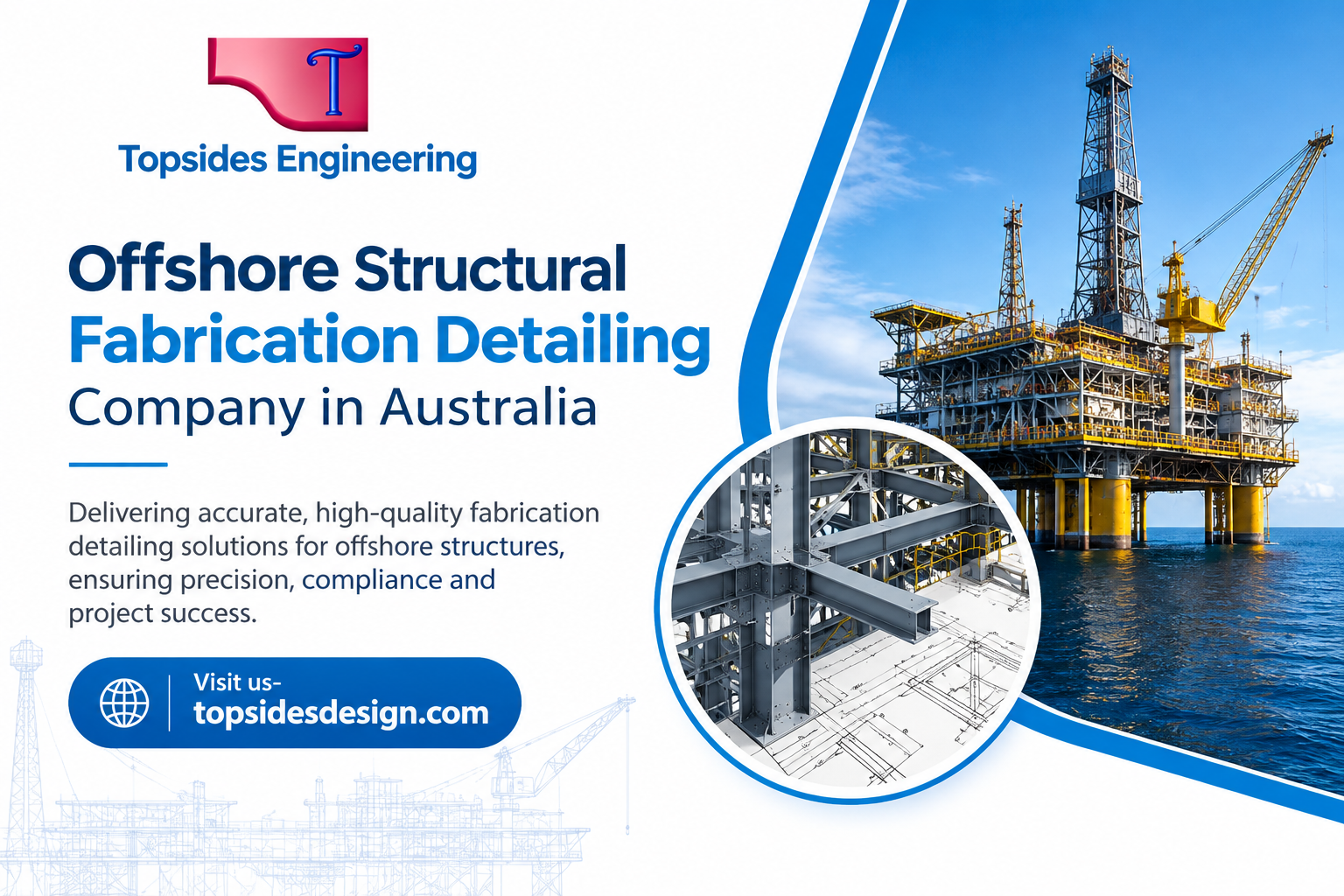
How Can an Offshore Structural Fabrication Detailing Company in Australia Improve Coordination Between Design and Fabrication
Offshore structural projects require close coordination between engineering design and steel fabrication to ensure that every component meets project specifications, fits correctly, and can be assembled efficiently. Even minor discrepancies between design models, engineering drawings, and fabrication documents can lead to rework, material waste, and construction delays. These challenges become more complex when projects involve offshore platforms, topsides, jackets, and other large steel structures.
An Offshore structural fabrication detailing company in Australia helps bridge the gap between engineering intent and practical fabrication requirements by converting structural designs into detailed, fabrication-ready information. Through accurate 3D modeling, coordinated drawings, clash detection, and consistent documentation, structural detailing professionals help engineers, fabricators, and project teams work toward the same objectives throughout the project lifecycle.
This blog explores how 3D modeling, fabrication drawings, revision management, and early collaboration help improve coordination between structural design and fabrication while reducing errors and project delays.
Why Is Coordination Between Design and Fabrication Important
Design and fabrication teams work toward the same structural requirements but approach projects from different perspectives. Engineers focus on structural integrity, load requirements, design standards, and overall performance. Fabricators need precise dimensions, connection details, material specifications, and assembly instructions to manufacture components accurately.
Without effective coordination, differences between engineering assumptions and workshop requirements can create avoidable problems.
For example, a connection designed without considering fabrication access may require modifications during production. Similarly, inconsistent dimensions between structural models and shop drawings can affect component fit-up during assembly.
Professional structural steel fabrication drawing services in Australia help address these challenges by translating engineering requirements into clear, coordinated drawings that support accurate manufacturing and assembly. By addressing these requirements early, project teams can improve workflow efficiency while maintaining the required quality and safety standards.
How Does Structural Detailing Bridge the Design-to-Fabrication Gap
Structural detailing translates approved engineering information into practical documents that fabrication teams can use. This process requires careful interpretation of structural drawings, design models, specifications, and project requirements.
A detailing team develops information such as general arrangement drawings, assembly drawings, individual part drawings, connection details, and material lists, depending on the project scope. A reliable shop drawing preparation & detailing company in Australia can help coordinate these deliverables so fabricators receive consistent information about component dimensions, connection requirements, material specifications, and assembly arrangements.
An experienced detailing team also checks that the information remains consistent across the relevant project documents. When discrepancies arise, they can be identified and referred to the responsible engineering team for clarification before affected components enter production.
This structured approach helps maintain alignment between the intended structural design and the physical components produced in the fabrication workshop.
How Does 3D Modeling Improve Design and Fabrication Coordination
Three-dimensional modeling gives project stakeholders a shared visual representation of the proposed structure. Instead of relying exclusively on separate two-dimensional drawings, engineers, detailers, and fabricators can review the arrangement of structural members and connections within a coordinated model. For offshore structures, this is particularly useful when multiple beams, columns, braces, platforms, and support elements intersect within limited spaces.
Identifying Design Conflicts Early
A coordinated 3D model can help identify geometric clashes, overlapping members, and potential clearance issues before fabrication starts. Detecting these conflicts during detailing is generally easier than correcting manufactured components later. An experienced offshore steel fabrication detailing company in Australia can use these coordination practices to help identify potential fabrication issues and communicate discrepancies for review before production.
Improving Visualization
Fabricators can better understand how individual members relate to the overall structure. This supports clearer interpretation of complex assemblies and helps teams anticipate fit-up challenges.
Supporting Consistent Drawings
Depending on the software and workflow, coordinated models can support the production of related fabrication drawings and material information. Model-based detailing can reduce inconsistencies caused by maintaining disconnected documents, provided revisions are managed correctly.
These benefits make 3D modeling a valuable tool for improving communication between design offices and fabrication workshops.
How Can Fabrication Drawings Reduce Miscommunication
Fabrication drawings provide the practical information needed to manufacture and assemble structural components. Their accuracy and clarity directly influence how effectively workshop teams can interpret engineering requirements.
An offshore structural fabrication detailing company in Australia prepares drawings that reflect the approved design and applicable project specifications. Depending on the scope, these documents may include:
- General arrangement drawings: Show the overall configuration and positioning of structural elements.
- Assembly drawings: Explain how multiple components fit together.
- Single-part drawings: Provide manufacturing details for individual steel components.
- Connection details: Communicate the required arrangement of plates, bolts, welds, and other connection elements.
- Material lists: Identify the materials and quantities required for fabrication.
Consistent component marks, dimensions, drawing references, and revision information help teams identify the correct parts and documents.
Before fabrication begins, relevant drawings should undergo the required checking and approval processes. This helps ensure that workshop personnel are working from authorized information rather than outdated or unapproved revisions.
How Does Revision Management Keep Projects on Track
Offshore structural projects may experience design changes due to engineering reviews, equipment interfaces, client requirements, or site constraints. When these changes are not communicated properly, different teams may unknowingly work from conflicting information.
A structured revision management process helps prevent this problem.
Each drawing and model should have clear identification, revision status, and approval information. When a design change occurs, the affected documents and components should be reviewed to determine what needs updating.
The revised information must then reach the relevant engineering, procurement, and fabrication teams before it is used for production.
Effective revision management helps project teams:
- Identify the latest approved design information.
- Track changes to structural members and connections.
- Reduce the risk of fabricating components from outdated drawings.
- Maintain traceability throughout the project.
- Coordinate modifications across interconnected structural elements.
Clear communication channels and controlled document distribution are essential for maintaining this process, particularly when project stakeholders operate across different locations.
What Should You Look for in an Offshore Structural Detailing Partner
Selecting a suitable detailing partner involves more than comparing delivery times or pricing. Project teams should evaluate the provider’s technical capabilities, documentation practices, communication processes, and experience with comparable structural requirements.
Consider the following factors:
- Offshore project experience: Familiarity with topsides, jackets, fixed platforms, and other relevant structural systems.
- Modeling capabilities: Experience with suitable 3D modeling and detailing software, including Tekla Structures where appropriate.
- Drawing quality: Clear, coordinated fabrication drawings that follow project specifications.
- Quality control: Defined checking procedures and processes for identifying discrepancies.
- Revision management: Reliable methods for tracking and distributing updated documents.
- Project communication: Effective coordination with engineers, fabricators, and other stakeholders.
- Delivery planning: Realistic schedules that align with fabrication milestones and approval requirements.
A detailing partner with appropriate technical resources and established coordination processes can help project teams manage information more effectively from design development through fabrication.
End Notes
Coordination between structural design and fabrication depends on accurate detailing, reliable 3D models, clear fabrication drawings, controlled revisions, and consistent communication among project stakeholders. These practices help reduce avoidable errors, improve assembly planning, and support more predictable offshore construction workflows. Choosing the right offshore structural fabrication detailing company in Australia is therefore an important consideration for offshore contractors and steel fabricators working on complex structural projects.
If you’re planning an offshore structural project and looking for reliable detailing support to improve coordination between design and fabrication, partnering with an experienced service provider like Topsides Engineering can make a meaningful difference. We offer offshore structural engineering and detailing solutions for complex structures, including topsides and jackets. Visit our website now to explore our services and discuss your project requirements.